Stoke Newington House Clearance — Recycling & Sustainability
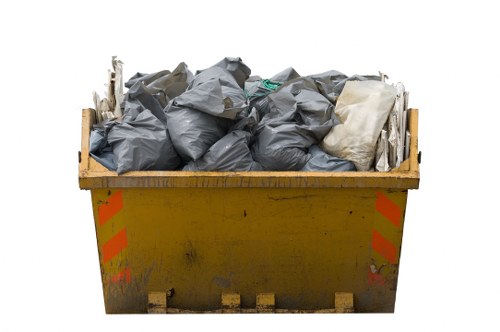 At Stoke Newington House Clearance we place sustainable waste management at the heart of every job. Our approach to the eco-friendly waste disposal area and the local sustainable rubbish area is practical, measurable and community-focused. We aim to minimise landfill, maximise reuse and ensure that materials collected during house clearances in Stoke Newington are handled in the greenest possible way.
We work within the framework of local borough waste strategies — notably the London Borough of Hackney's emphasis on separation at source — and adopt best practice from neighbouring boroughs. This means clear segregation of paper and card, glass, plastics, metals and food waste during removals, and an explicit commitment to divert reusable items from the waste stream. Our house clearance Stoke Newington teams are trained to sort on-site and route materials into the correct recycling streams.
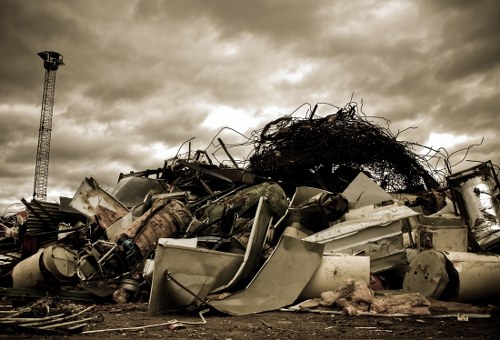 Our recycling percentage target is ambitious: we aim to achieve a minimum of 75% recycling and reuse of all material recovered from domestic clearances by 2028. That includes outright reuse (furniture, appliances and household goods), repair and upcycling, plus routing recyclable fractions to licensed reprocessing facilities. We monitor this progress with regular audits and publish aggregated figures to demonstrate continuous improvement.
Local infrastructure: transfer stations and sustainable processing
To support an effective eco-friendly waste disposal area, we use a network of local transfer stations and processing sites across north and central London. This includes working with municipal and privately operated facilities such as the Edmonton EcoPark and other London transfer hubs that accept segregated loads. These sites are selected for their environmental credentials and ability to process mixed loads responsibly.
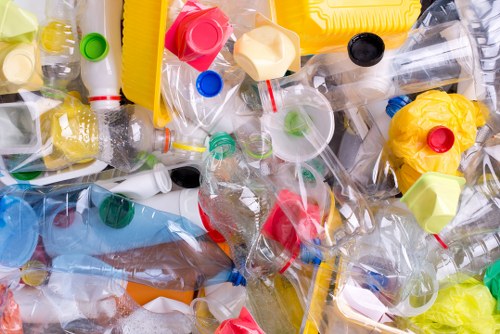 When possible, materials recovered in Stoke Newington are sent to local reprocessors to reduce haul distances and carbon mileage. This keeps the clearance footprint low and supports circular economy practices — e.g., glass to bottle manufacturers, paper to recyclers, metals to scrap processors and textiles to charity reprocessors or textile recyclers.
We also use licensed transfer stations that accept hazardous fractions (e.g., certain batteries, fluorescent tubes and electrical items) and ensure these are handled under the correct controls. Compliance with London regulations and waste carrier licencing is non-negotiable for every stage of disposal.
Charity partnerships, reuse and community benefit
Partnerships with charities are central to our sustainable rubbish area model. We collaborate with local and national organisations to maximise reuse: donations of good-condition furniture, household items and clothing are diverted to community groups, charities and social enterprises. Typical partners include local charity shops, furniture reuse charities and homelessness support organisations.
Key aspects of these partnerships include:
- Direct donations: Items suitable for reuse are delivered directly to charity partners, minimising handling and transport.
- Collection programmes: Co-ordinated pick-ups for larger donations from clearance sites.
- Community redistribution: Supporting local families and social projects with essential household goods.
We maintain relationships with a range of charities, from local Hackney-based groups to national reuse charities, ensuring that as many items as possible find a second life instead of being discarded.
Our sustainable rubbish area services extend beyond simple removal. We offer condition assessments on-site to determine optimal pathways: refurbishment, resale, donation or recycling. Where refurbishment is viable, items are routed to social enterprises for repair, creating local jobs and extending product life cycles. Materials that cannot be reused are separated to maximise recycling yields.
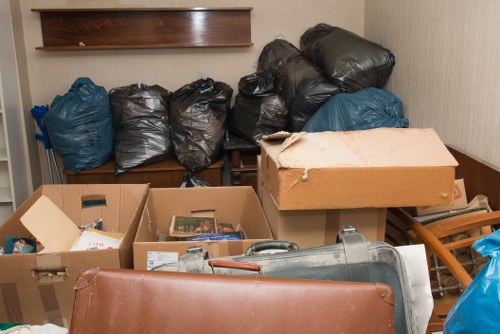 A practical part of delivering low-carbon clearances is our vehicle fleet. We operate a mix of low-carbon vans — including electric and Euro VI / ULEZ-compliant vehicles — and consolidate loads to reduce trips. Our logistic planning minimises empty runs, uses cleaner routes and schedules to avoid peak traffic, and monitors emissions so we can improve efficiency over time.
 We also support householders who want a greener clearance: options include selecting charity-only removals for reusable goods, requesting local drop-off at designated transfer stations, or choosing a low-emission vehicle for their job. These choices feed directly into our recycling percentage target and help keep Stoke Newington’s neighbourhoods cleaner and more sustainable.
Measured, local and future-focused: Stoke Newington house clearance services must meet modern environmental expectations. By combining on-site segregation, strong charity partnerships, use of verified transfer stations, and a low-carbon van fleet, we create a credible, local model for a sustainable rubbish area. Our targets and partnerships are designed to align with borough approaches to waste separation and to contribute positively to the circular economy in Hackney and the surrounding London boroughs.
Summary of commitments:
- Minimum 75% recycling and reuse target for clearance material by 2028.
- Use of local transfer stations and reprocessors to lower transport emissions.
- Active partnerships with charities for reuse and redistribution.
- Deployment of low-carbon vans and logistics that reduce the clearance carbon footprint.
By prioritising an eco-friendly waste disposal area and a sustainable rubbish area for every clearance, Stoke Newington house clearance services can be both practical for customers and responsible for the environment.